


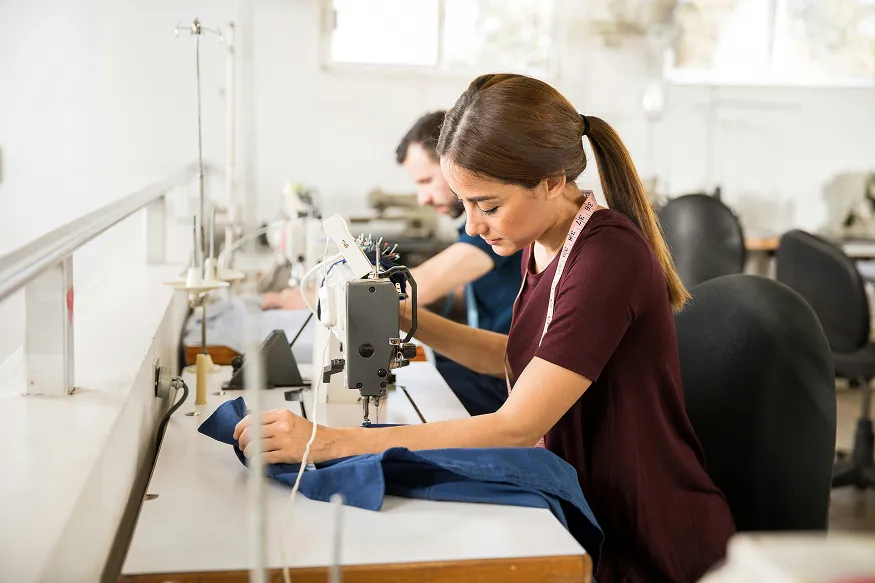
We’ve all felt the difference. One jumper bobbles and loses its shape by spring; another looks better after five winters than the day you bought it. The gap between the two isn’t luck. It’s a series of small, mostly invisible decisions made long before the garment reached the rail.
Quality is what’s left when the price tag has long been forgotten.
Here’s what to look for behind the seams, and why it’s worth paying for.
It Starts with the Fabric
Fibre is destiny. Natural materials like wool, cotton, and linen breathe, age gracefully, and can be mended; many cheap synthetics do none of the three. But natural isn’t automatically better. A loosely woven wool will sag, and a flimsy cotton will wear thin, so weight and weave matter as much as the label.
A few quick tests you can do in the shop:
- Scrunch it. Good fabric springs back; poor fabric stays crumpled
- Hold it to the light. If you can see through a supposedly hearty fabric, it’s been woven thin to save money
- Feel the weight. Substance in a coat, knit, or pair of trousers usually signals density of material, and density means durability
Read the Seams
Turn the garment inside out. This is where corners get cut first, because makers assume you’ll never look.
- Stitch density. Closer, smaller stitches take more time and thread, and hold far longer than long, loose ones
- Finished edges. Raw, fraying edges inside a garment are a sign of a rushed make
- Pattern matching. On checks and stripes, quality makers align the pattern across seams and pockets. It wastes fabric, which is exactly why cheap garments skip it
- Reinforcement. Look for bar tacks or extra stitching at stress points: pocket corners, belt loops, the top of a vent
The Details That Give It Away
Hardware and trims are small, but they’re honest. Buttons sewn with a shank of thread (so they can actually pass through the buttonhole without straining), zips that run smoothly and come from a named maker, buttonholes that are densely stitched rather than fraying at first use. A maker who spends properly on the parts you touch every day has usually spent properly everywhere else.
Nobody regrets the coat that lasted fifteen years.
Cost Per Wear: The Honest Arithmetic
A £40 jacket worn ten times costs £4 a wear. A £200 jacket worn two hundred times costs £1. Quality clothing is only expensive on the day you buy it; from then on, it gets cheaper every time you put it on.
There’s a caveat, and it matters: price is a clue, not a guarantee. Plenty of expensive clothing is poorly made, trading on a logo rather than a make. That’s why the checks above are worth learning. They let you judge the garment, not the marketing.
Buy Less, Choose Well
The case for quality isn’t really about clothes at all. It’s about owning things you trust: the jacket you grab without thinking, the jumper that’s shaped itself to you, the boots that have been resoled twice and will outlast a third. Fewer, better things, chosen carefully and cared for properly.
That’s what’s behind the seams. And once you’ve seen it, you can’t unsee it.
This is demo content created for blog post theme preview purposes.

Leave a Reply